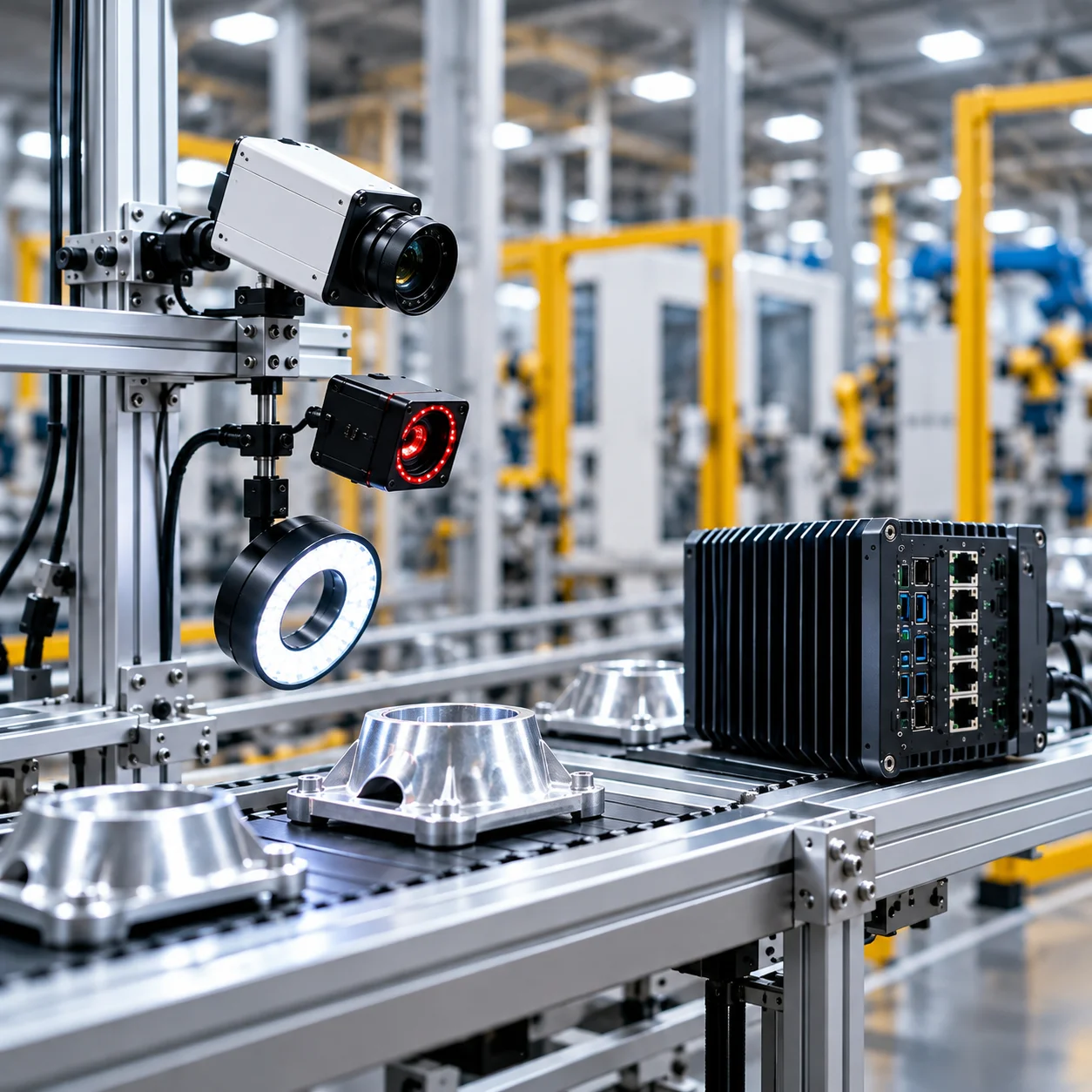
AI Visual Inspection System for Industrial Defect Detection
Ombrulla’s AI Visual Inspection System for Defect Detection ensures faster, accurate inspections on every production line.
Ombrulla's AI visual inspection system helps business bring accuracy, speed and consistency in every stage of your quality process. Instead of depending on manual checks where small defects are missed, our system uses advanced computer vision to find issue early and make production runs effectively.
We partner with our clients to design and implement inspection workflows which deliver measurable results and support continuous improvement.
Unlocking next level quality control through our AI Visual Inspection system, a smarter way to detect defects with high accuracy and speed which reduces manual workload helps improve production, consistency and gain real time insights that helps to reduce overall cost and increase production.

Our AI visual inspection system trained with powerful AI defect detection models identify even tiny errors in real time to make sure every product meets the highest quality standards that human inspection simply can’t match.
Our AI analyzes images or videos faster than humans, to make real-time defect detection on high-speed and helps to boost overall productivity.

Our visual inspection system maintains consistent quality control and makes sure every product meets industry standards which reduces risks and prevents costly legal issues.

Our AI visual inspection system converts raw data into actionable insights which highlights performance gaps and defect behaviours so teams can continuously improve operations
TritvaConverts images or videos into immediate defects alerts and useful insights, helps teams lower their expenses, avoid downtime and strengthen safety and compliance.
Create accurate AI inspection models with enhanced image quality, noise reduction, and the right algorithms.
Process images and videos instantly to detect defects, classify products, and pinpoint exact issues.
Store all inspection data, monitor dashboards, and generate insightful reports to drive better decisions.
Reliable Scalable Cost-effective Tritva replaces manual inspections with AI powered visual inspection helping businesses cut cost, speed the production and deliver with consistent quality.
Industries that adopt AI Visual inspection systems for defect detection gain stronger quality control, lower operating costs, and faster production which deliver effective and accurate results that traditional methods can't give.

Ombrulla’s AI visual inspection system not only detects defects instead it strengthens your entire product quality. You get faster inspections, reliable decision-ready insights, and consistent output. Each feature is custom made to reduce your rework, protect margins and make sure your production runs with high quality, precision, and predictable performance.
Ombrulla enables enterprises to develop and scale AI inspection models with speed and stability. Our engineering approach removes complexity, strengthens security, and gives leadership a dependable foundation for long-term AI growth.
We make raw visual data into High-quality data prepared for AI and control security, compliance and make audits if needed.
Our Ai softwares are trained for your specific needs and updated regularly to stay Correct, reliable, and ready to use
Our AI agents retrieve the right data instantly and use the right tools automatically, enabling faster decisions and smoother inspection workflows.
Distributed compute lets you run AI visual inspections at scale with high performance and controlled infrastructure costs.
Faster inference means faster decisions—our serving setup ensures your inspection models run reliably at any scale.
A unified ML platform that keeps your inspection models trained, optimized, and running smoothly—without operational friction.
We test every model continuously to make sure everything is safe , consistent and reliable inspection performance in a real production environment.
We safeguard every image and model with strong security controls, ensuring your IP and operations remain fully protected.
AI in defect detection helps to identify the defects with high accuracy which ensures every product meets their quality standards and it also catches issues early which reduces waste , rework and production delays.
By applying AI to quality control , manufacturers will make sure that every batch meets the strict requirements. This results in higher efficiency, low defects and efficient operations.
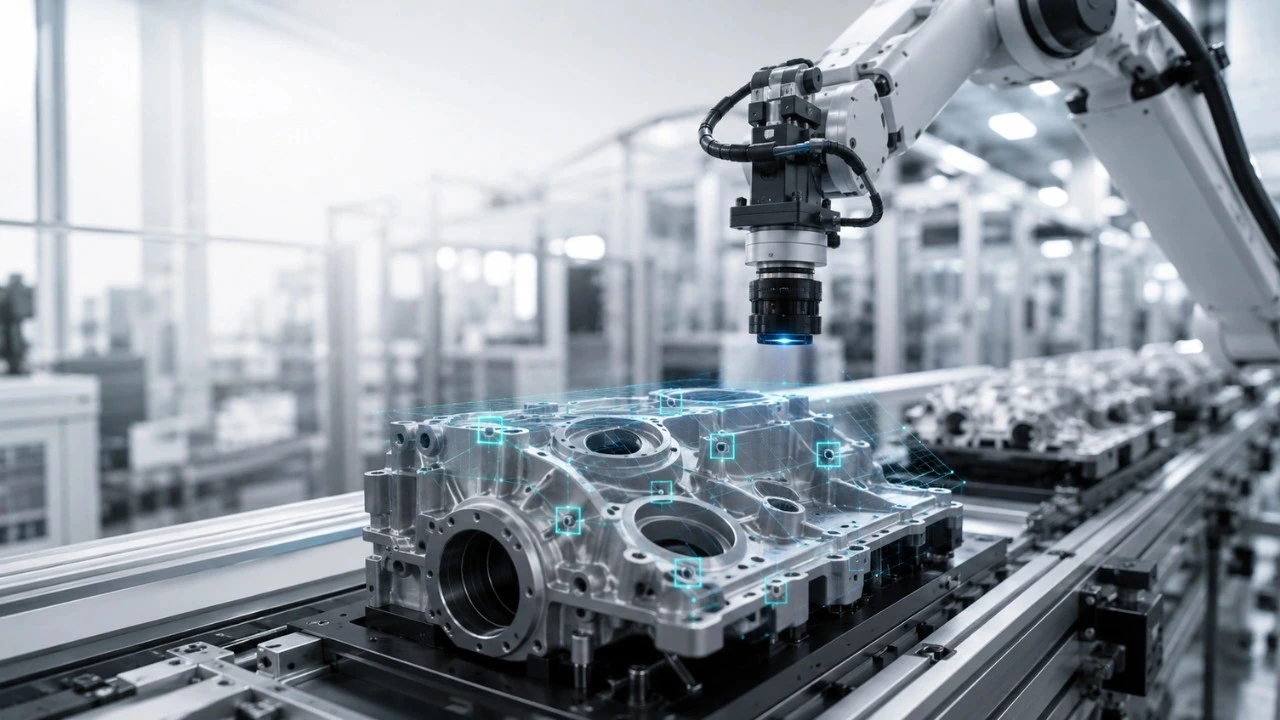
Industrial computer vision uses advanced imaging to detect defects and variations instantly. This helps teams maintain high standards without slowing down output.
With machine learning, inspection systems learn from real production data. The more they see, the better they get at spotting issues early and reliably.
With automated inspection, machines handle repetitive checks with high precision. This improves productivity while eliminating human errors.
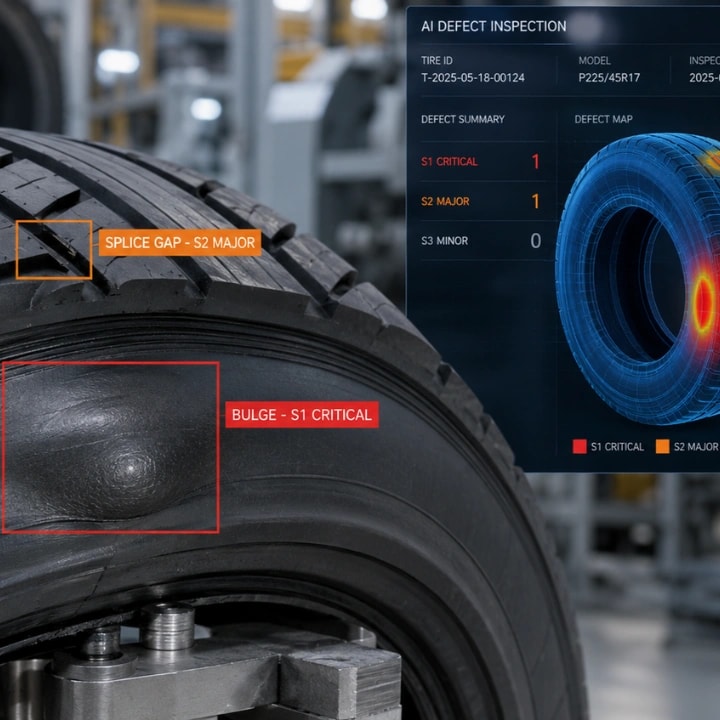
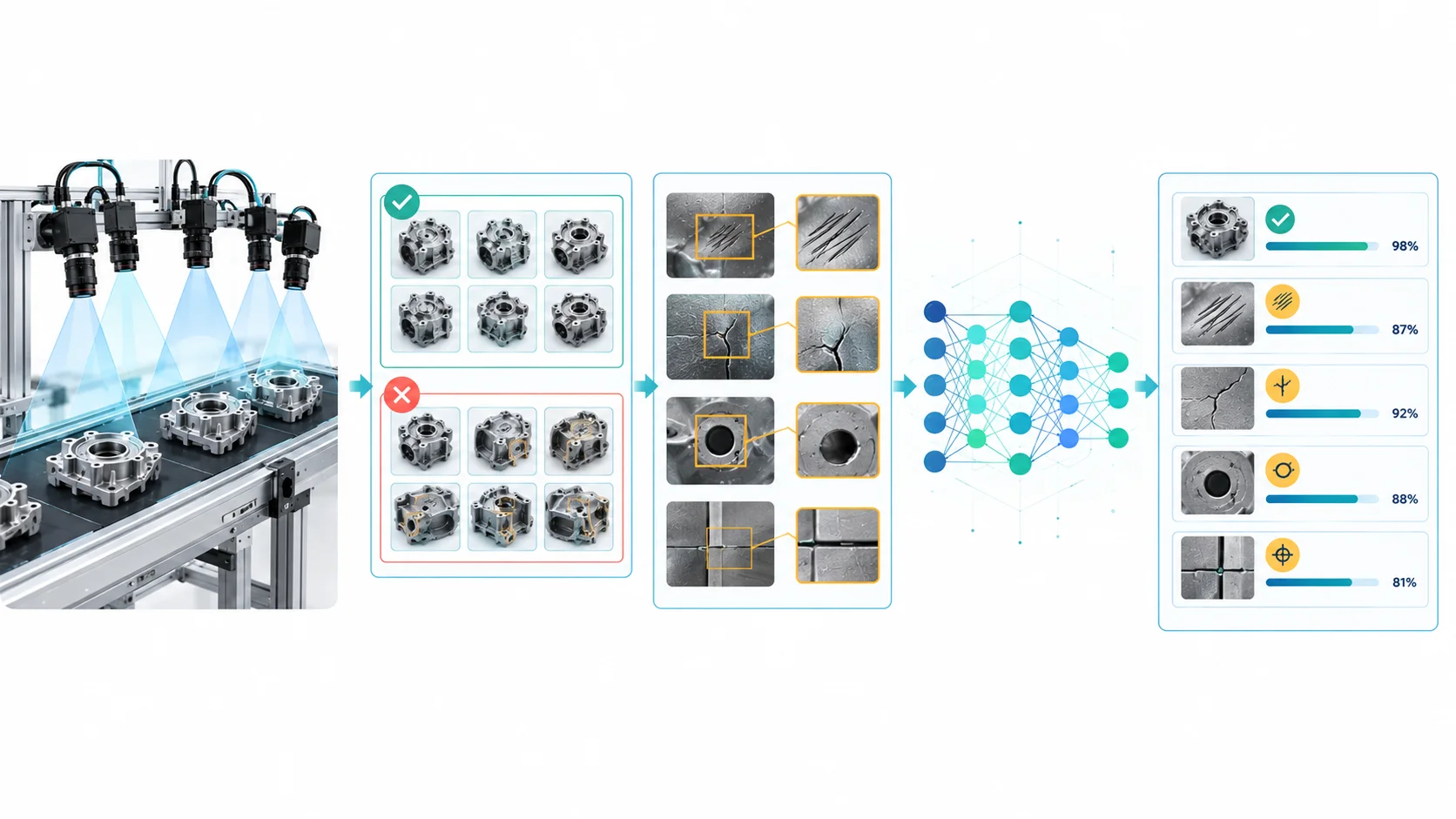
AI visual inspection uses artificial intelligence and machine learning algorithms to automatically detect defects, anomalies, and quality issues in products by analyzing images or video footage, ensuring high-quality visual inspection with AI precision.
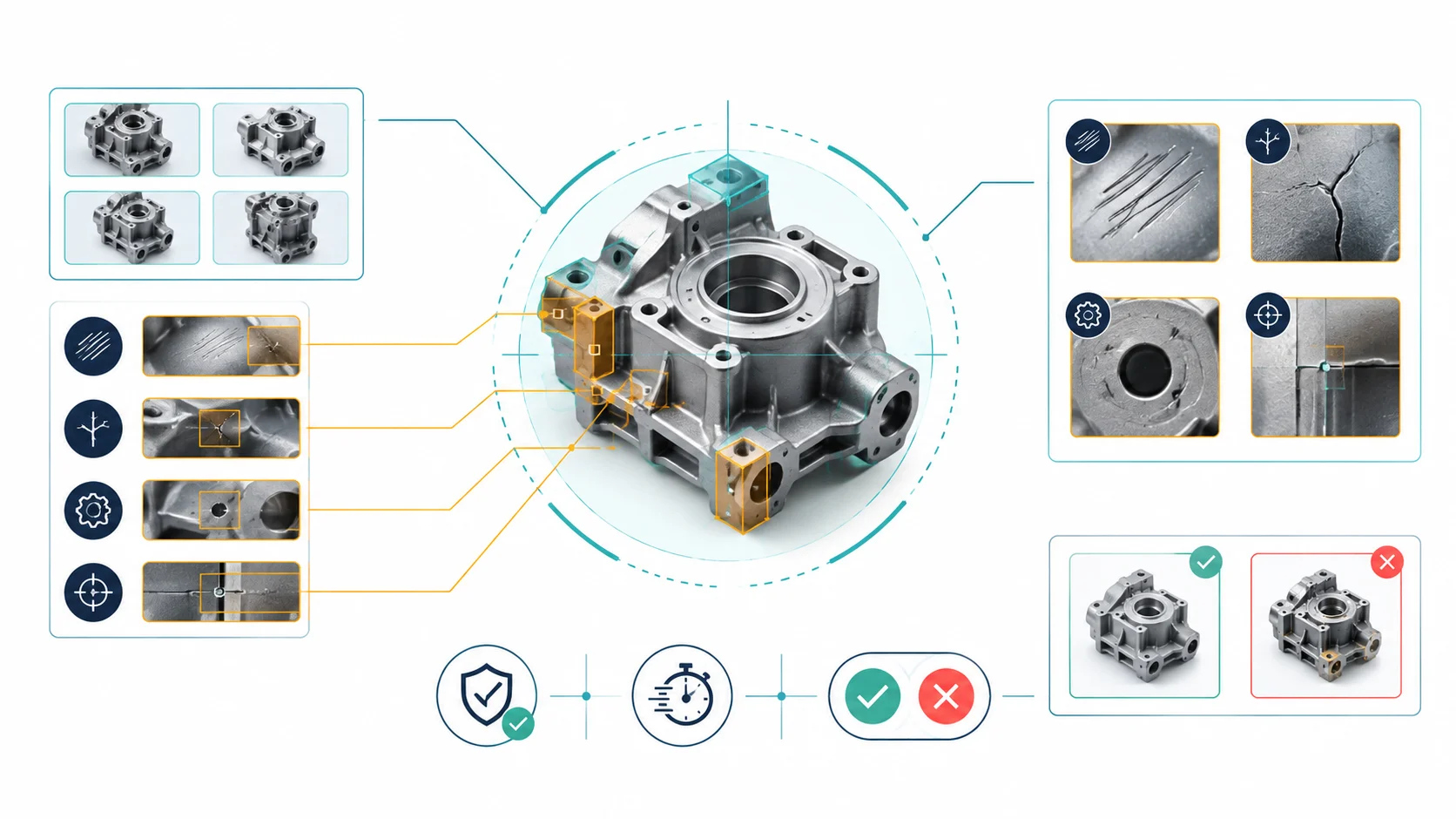
AI visual inspection works by training Artificial Intelligence models on a dataset of images showing both defective and defect-free products. The system then uses this knowledge to identify and classify defects in real-time, significantly enhancing the accuracy of manufacturing inspection.
AI visual inspection systems can be trained to detect a wide variety of defects, depending on the specific application. Here are some examples: Surface defects (scratches, cracks, uneven surfaces), Weld seam flaws (porosity, cracks), Foreign objects, Heat treatment inconsistencies, Colour discrepancies, Misalignments, Missing components.
Visual inspection in manufacturing, powered by AI, offers benefits such as greater accuracy and consistency in defect detection, lower labor costs, faster inspection times, real-time monitoring, and higher product quality.
AI visual inspection is generally more accurate and consistent than manual inspection. Computer-vision-based quality control eliminates human errors, subjectivity, and fatigue, ensuring uniform and reliable quality control throughout the process.
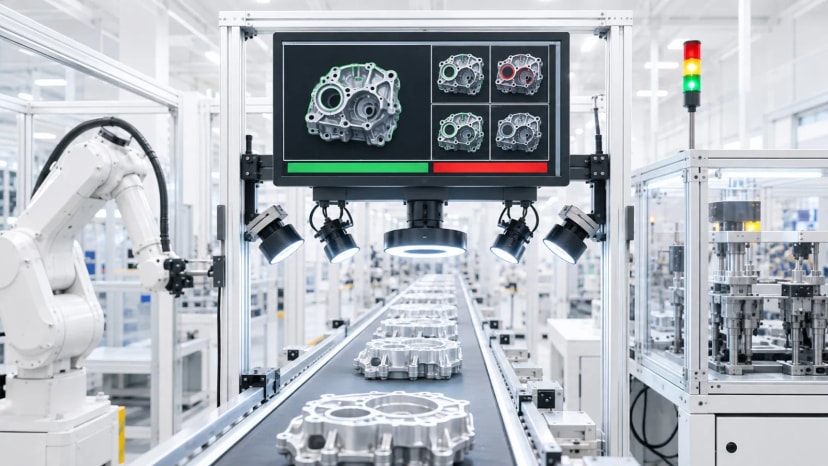
Yes, AI visual inspection systems can be integrated with existing production lines. This involves setting up cameras and sensors, connecting the AI system to the control system, customizing algorithms for specific defects, and training the system with sample data. Integration enhances efficiency, accuracy, and consistency in quality control.
High-quality images or videos of both defective and non-defective products are required to train the AI models. The more varied and extensive this dataset is, the better the AI visual inspection system's performance will be in accurately identifying and classifying defects.
Implementing an AI visual inspection system typically takes 8–12 weeks . The timeline depends on system complexity, production line compatibility, customization needs, and the time required for training, calibration, and testing.
While there is an initial investment, AI visual inspection is cost-effective in the long run due to increased efficiency, reduced defect rates, lower labour costs, and improved product quality.
While AI visual inspection offers significant advantages, some limitations may include the need for a large amount of training data, potential challenges in inspecting complex or highly variable products, and the initial setup costs. However, these are often outweighed by the system's benefits.
For textiles, AI visual inspection identifies defects such as broken threads, stains, holes, or misaligned patterns. It ensures fabric quality, minimizes waste, and upholds strict aesthetic and functional standards during production.
In automobiles, AI visual inspection detects paint defects, scratches, dents, and assembly errors (e.g., missing bolts or misaligned parts) on vehicle exteriors and components. It ensures consistent quality, reduces human error, and speeds up production while maintaining precision.
AI visual inspection is versatile and can be adapted for various industries, including automotive, electronics, food and beverage, pharmaceuticals, textiles, and more. The specific defects and inspection criteria are tailored to the needs of each industry.
Identify your challenge, and we're here to help